
How Can Public Safety Graphics Improve Visibility and Recognition?
Vehicles used by public agencies, emergency services, municipalities, and community organizations need to communicate information quickly and clearly. Well-designed public safety graphics can help make these vehicles easier to identify while supporting visibility, recognition, and a consistent visual identity. From emergency response units to service vehicles operating in busy public areas, graphics can serve both practical and visual purposes.
Vehicle graphics have developed beyond simple lettering and basic identification. Today, thoughtful designs can combine high-visibility elements, clear typography, recognizable symbols, reflective components, and organizational branding to create effective communication surfaces.
This blog explores how public safety graphics contribute to vehicle identification, why professional design matters, and how wrapping and fleet applications can create a cohesive presence on the road.
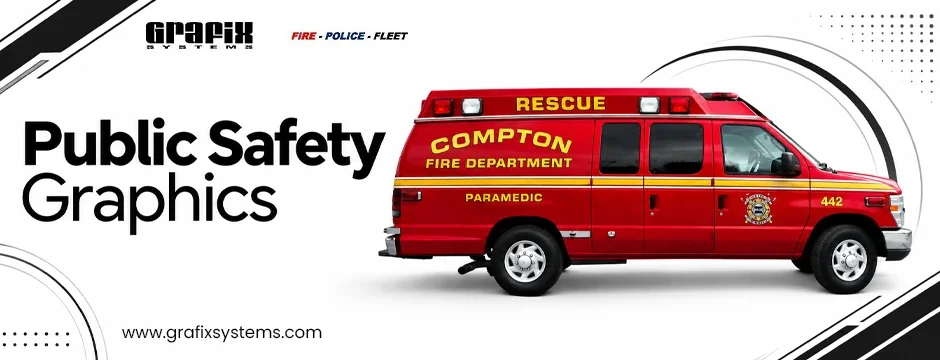
Importance of Clear Visual Communication on Vehicles
Public service vehicles often operate in environments where people need to recognize them within seconds. Whether a vehicle is approaching a roadside incident, entering a neighborhood, or working around a public facility, its appearance can communicate its purpose before anyone reads detailed information.
Clear lettering and carefully positioned graphics can make identification easier from different viewing angles. Vehicle size, body contours, windows, doors, and equipment must all be considered when planning the visual layout. A design that looks effective on a computer screen may not communicate equally well once applied to a moving vehicle.
Color contrast also has an important role in visibility. Strong contrast between the vehicle surface and graphic elements can improve legibility, while appropriately sized lettering helps important information remain readable at greater distances.
Public safety graphics should be treated as a communication system rather than merely a decorative addition. Every visual element needs to work together so that the vehicle's purpose and identity remain easy to understand.
Effectiveness of Vehicle Graphics For Public Services
An effective graphic system begins with a clear understanding of the vehicle's purpose. Emergency response vehicles may require highly visible identification, while municipal service vehicles may focus more strongly on business recognition and contact information.
Typography should remain simple and readable. Excessively decorative lettering can reduce clarity, particularly when vehicles are viewed briefly or from a distance. Important information should receive visual priority instead of competing with unnecessary design elements.
Placement is equally important. Graphics should account for doors, handles, windows, mirrors, lights, equipment compartments, and other physical features. Strategic positioning prevents important information from being interrupted by vehicle components.
Durability is another consideration. Vehicles used outdoors can experience sunlight, rain, temperature changes, road debris, and frequent cleaning. Choosing appropriate materials and installation methods can help graphics retain their appearance while remaining functional over time.
Professional Design Strengthens Visual Consistency
Designing graphics for a single vehicle is different from developing a visual system that needs to work across several vehicle types. Different body shapes can change the proportions and placement of logos, text, symbols, and other elements.
This is where working with a commercial graphics expert can be valuable. Professional design planning can account for vehicle dimensions, viewing angles, brand requirements, readability, and installation limitations before production begins.
Consistency becomes particularly important when businesses operate cars, vans, trucks, or larger specialty vehicles simultaneously. A unified graphic language can help people associate different vehicles with the same organization, even when the vehicles vary considerably in size and shape.
A strong design system does not mean every vehicle has to look identical. Instead, key elements such as typography, imagery, colors, and positioning can be adapted to different vehicle forms while maintaining a recognizable overall appearance.
Vehicle Wrapping Turns Transportation into Communication
A vehicle can provide a large moving surface for communicating a business’s identity. Instead of treating the vehicle body as empty space, designers can use appropriate areas to create a coordinated visual presentation.
Modern branding vehicle wrapping can cover substantial portions of a vehicle while incorporating logos, colors, messaging, imagery, and other visual elements. Depending on the objective, the treatment can range from partial coverage to a more comprehensive wrap.
For businesses with public-facing vehicles, wrapping can create a consistent appearance across locations and routes. A branded vehicle may be encountered by pedestrians, motorists, customers, and community members throughout its daily operation, extending visual recognition beyond a fixed building or sign.
The design must still prioritize functionality. Critical vehicle components, visibility requirements, windows, lights, and operational features should not be compromised by graphic placement. A successful wrap combines visual impact with practical vehicle considerations.
Maintenance of Consistency Across Multiple Vehicles
Organizations managing several vehicles often face the challenge of maintaining a recognizable identity across different models. A small utility vehicle, large truck, and passenger van can have dramatically different body dimensions, yet they may all need to communicate the same organizational identity.
This is where fleet vehicle graphics can provide a structured approach to visual consistency. Rather than creating unrelated designs for every vehicle, a coordinated graphic system can establish recurring visual elements that connect the entire fleet.
Consistency can also simplify future vehicle additions. Once a design framework has been established, new vehicles can be adapted into the existing system while accounting for their individual dimensions and features.
For public-facing fleets, this consistency can improve recognition. People become familiar with recurring visual patterns, making it easier to associate vehicles with the organization they represent. This is particularly useful for service fleets that travel through multiple communities or operate across large geographic areas.
Enhancing Brand Recognition Through Vehicle Graphics
Visibility is not limited to emergency situations. Public service and commercial vehicles operate throughout the day, creating repeated opportunities for recognition.
A clearly designed vehicle can communicate its purpose while traveling between locations, stopping at facilities, or remaining parked at a work site. Repeated exposure can gradually strengthen public familiarity with the organization.
Graphic scale matters in these situations. Large, uncomplicated visual elements are generally easier to recognize quickly than crowded layouts containing too much information. The most important identity elements should remain prominent while secondary information can occupy supporting positions.
Reflective materials may also be considered for vehicles that operate during lower-light conditions, depending on the vehicle's purpose and applicable requirements. When used appropriately, they can contribute to visibility without overwhelming the overall design.
Considerations of Businesses Before Applying Graphics
Planning should begin before any material is printed or installed. The vehicle's dimensions, surface condition, intended use, operating environment, and existing visual identity should all be reviewed.
The amount of information is another important consideration. A moving vehicle does not provide the same reading time as a stationary sign, so lengthy messages may not be effective. Short, recognizable information is usually easier to process.
Material selection should reflect the expected operating environment. Vehicles exposed to frequent outdoor use may require materials designed for durability and resistance to environmental conditions.
Installation quality also matters. Poorly applied graphics can create visual imperfections and may reduce the overall professional appearance. Proper surface preparation, accurate positioning, and careful application contribute to a cleaner finished result.
Maintenance should be considered as well. Regular cleaning using suitable methods can help preserve the appearance of vehicle graphics and allow potential damage or deterioration to be identified early.
Conclusion
From thoughtful typography and strategic placement to durable materials and coordinated fleet design, every element can contribute to a stronger visual presence. Well-planned public safety graphics can make vehicles more recognizable, improve visual communication, and establish consistency across public-facing operations.
For businesses seeking professional solutions across public safety and vehicle branding applications, Grafix Systems brings experience in vehicle graphics and fleet branding to projects that require a combination of design precision and practical application. By approaching vehicle graphics as a complete communication system, you can create vehicles that are clear, recognizable, and visually consistent wherever they operate.
FAQs
How do public safety graphics improve vehicle visibility?
Public safety graphics use clear typography, strong visual contrast, strategic placement, and suitable materials to make vehicles easier to recognize.
Why hire a commercial graphics expert for vehicle design?
A commercial graphics expert can account for vehicle dimensions, readability, branding requirements, body contours, and installation considerations.
What is the purpose of branding vehicle wrapping?
Branding vehicle wrapping transforms vehicle surfaces into coordinated visual communication areas featuring identity elements, messaging, and recognizable designs.
How do Fleet Vehicle Graphics improve consistency?
Fleet Vehicle Graphics establish recurring visual elements across different vehicle models, helping an entire fleet maintain a recognizable and professional identity.
Can public safety graphics support brand recognition?
Yes. Consistent graphics across public-facing vehicles can create repeated visual exposure and help people associate specific designs with an organization.
RAGs
Visual Communication through Public Safety Graphics
Public safety graphics make service and emergency vehicles easier to identify through clear, purposeful visual communication. Strategic typography, contrast, placement, and materials can improve recognition.
Designs of Commercial Graphics Expert
A commercial graphics expert can develop designs that account for vehicle dimensions, operating conditions, readability, and brand consistency. Professional planning also helps graphics work effectively across different vehicle shapes.
Use of Branding Vehicle Wrapping
Branding vehicle wrapping uses vehicle surfaces as mobile communication spaces for logos, colors, messaging, and other identity elements. It can create repeated exposure as vehicles travel through different locations.
Importance of Fleet Vehicle Graphics
Fleet Vehicle Graphics help maintain a consistent appearance across cars, vans, trucks, and other fleet vehicles. A coordinated system can strengthen recognition while allowing designs to adapt to different vehicle dimensions.
Factors Determining Vehicle Visibility
Vehicle visibility depends on factors such as contrast, lettering size, graphic placement, and material selection. A balanced design allows important information to remain recognizable without creating unnecessary visual clutter.